The Cost of a Click
Visualizing the impact of data centers.
- Role
- Sole designer
- Timeline
- 3 weeks
- Tools
- Blender

Marketing materials
Tickets for the event are printed on recycled graphics cards to help the visitor understand the amount of e-waste produced. Each ticket is printed like a receipt, continuing the motif of how much data centers cost. This motif of cost and receipt is repeated throughout the event signage and promotional materials.



The experience
The room is intended to feel as if the visitor is inside a data center, with server racks, the loud ambient noise of hundreds of computer fans, and screens intermixed throughout.
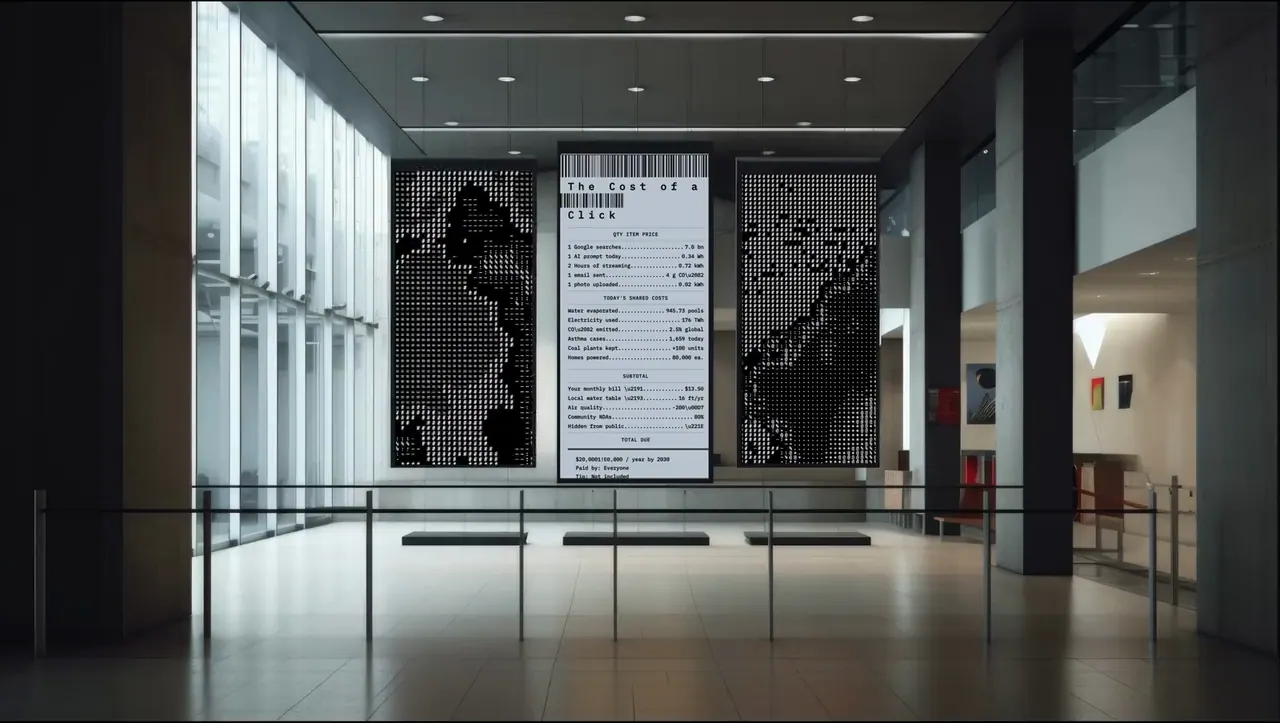



The screens
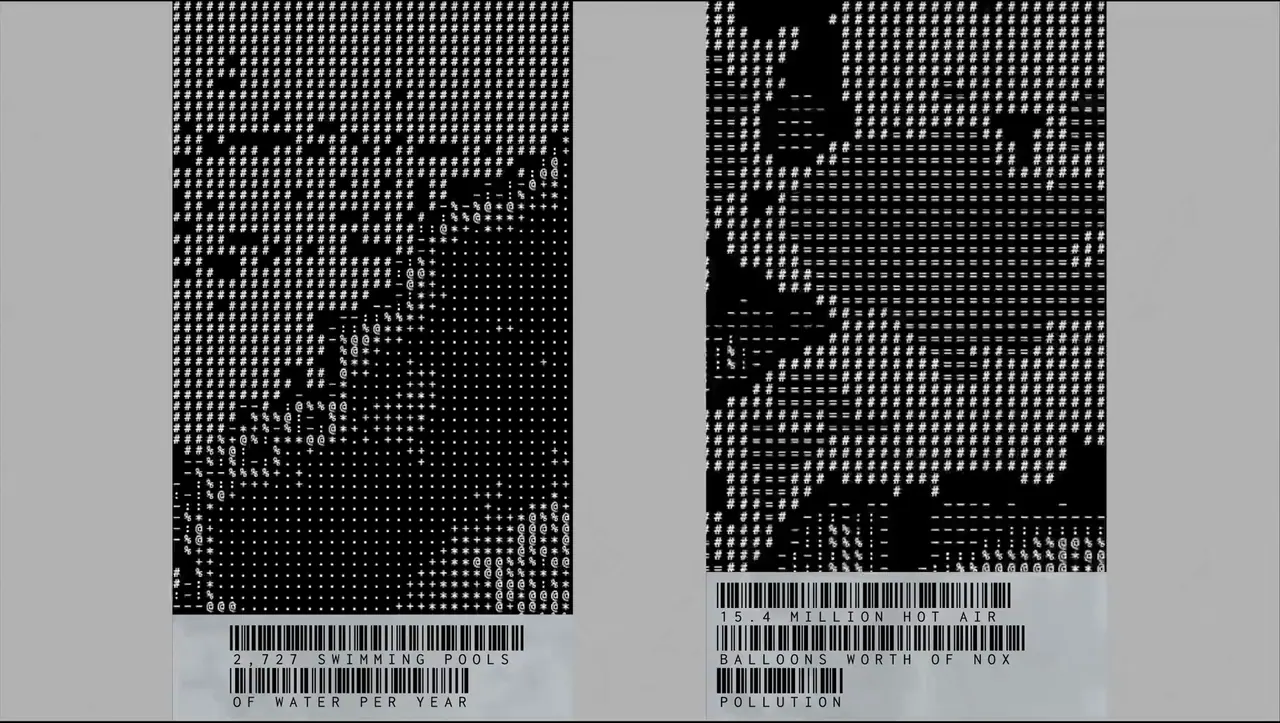
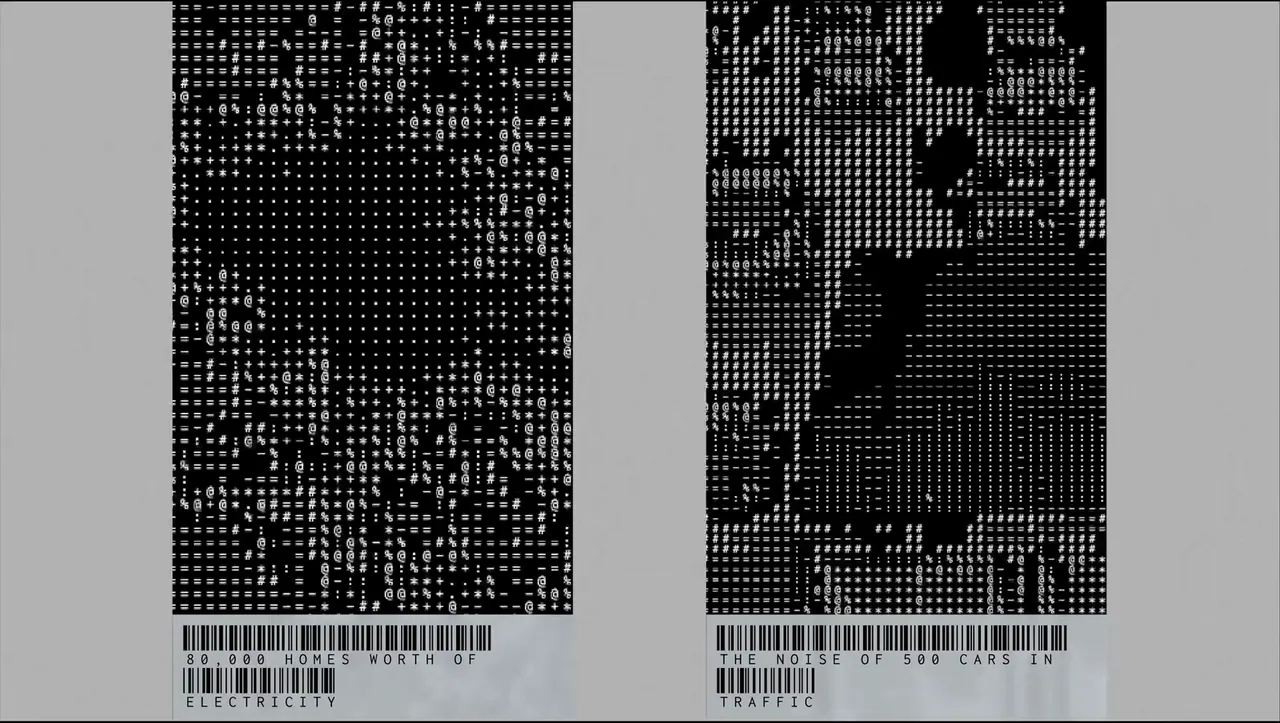
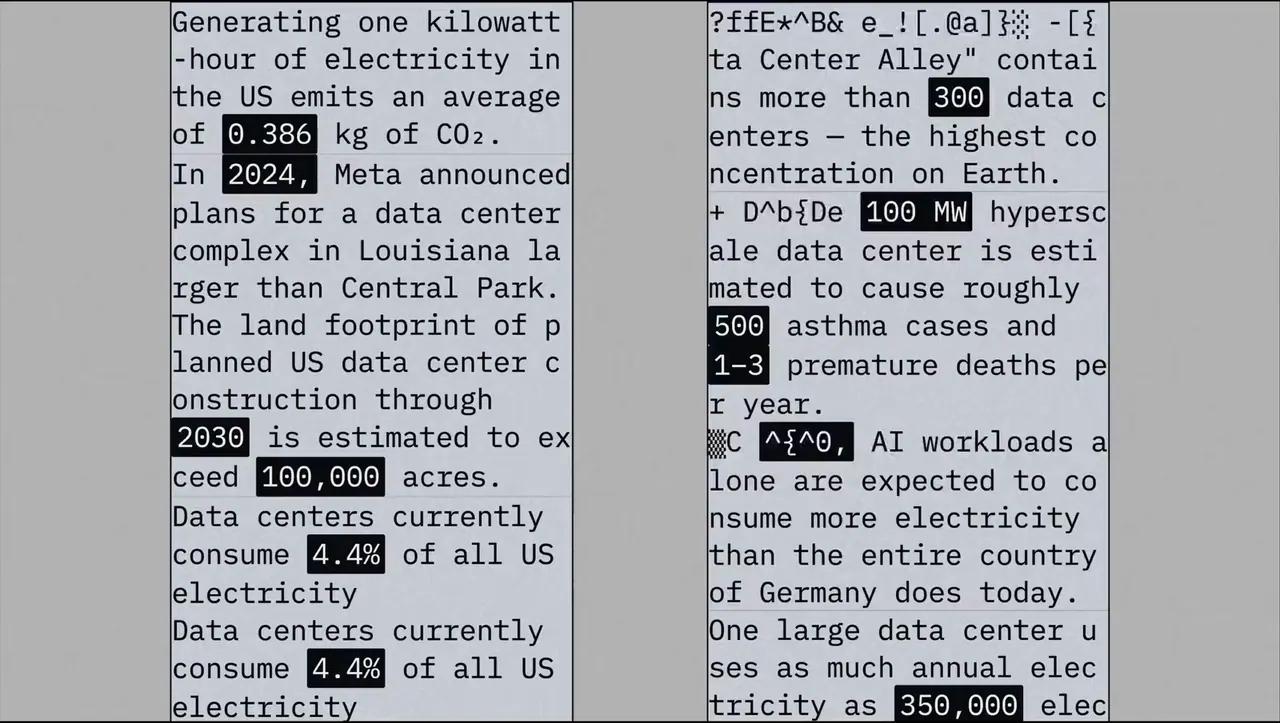
Some screens present the cost of one particular aspect of a data center. These screens use abstract, dithered visuals: water, fog, sparks, and cars are all transformed into a medium that is more machine-readable and less human-friendly. Other screens show a constant stream of data on what data centers are impacting right now. It never stops updating, just like a data center’s never-ending consumption.

The main screen
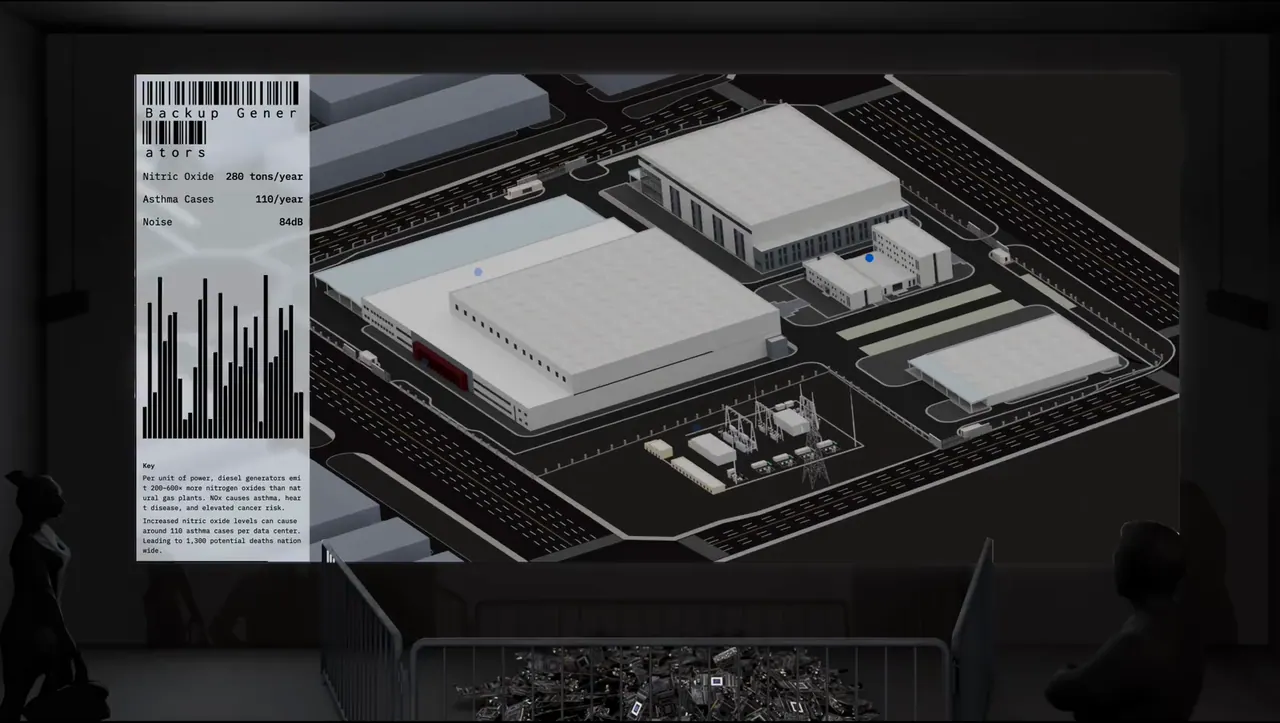
Visitors are then ushered toward the main screen, a 3D view of a data center complex. Each main area of the complex displays different information about its consumption and impact.

The offering
In front of the main screen, visitors find a pile of used graphics cards, where they return their graphics-card ticket. It demonstrates the idea of consumption as a growing heap of once-used tech accumulates in front of the ever-hungry data center. It also serves as a religious motif: visitors can be seen making an offering at the altar of the data center, fueling its ever-growing need for electronics.


Reflection
A single search carries a hidden cost in water, power, and electronic waste. Cost of a Click turns that invisible toll into a room you can feel, from a ticket printed on a dead graphics card to an altar of discarded hardware. The hard part was making the data land emotionally without lecturing; every motif had to carry the argument on its own. If the exhibit were built, the real measure of success wouldn’t be how impressive it looks, but whether visitors leave more aware of the cost of their own clicks.